
If you’ve ever watched a monkey for more than a minute or two, you know there’s something deliberate about the way it handles food. The pause before it picks a fruit, the small tilt of the head as if deciding whether the effort is worth it. Even if you haven’t seen them in person, you can probably picture those nimble hands and the bright eyes studying a branch.
People often assume monkeys survive on a predictable menu of bananas. The idea is so familiar it feels like a fact. But step onto a real African trail and you’ll see the truth is richer, sometimes a little stranger, and far more resourceful. Monkeys are creatures of opportunity. They’ll taste, test, and reconsider what they find, adapting their meals to whatever the season offers.
Here’s a closer look at what monkeys eat, how they choose, and why their diets can teach you something about living where the wild still has the upper hand.
If you had to name the one food monkeys seem to enjoy most, fruit would be the safest bet. Walk under a fig tree when the fruit is ripe, and you’ll hear rustling above you, followed by the soft plop of half-eaten pieces hitting the ground.
Fruits offer sugar, water, and vitamins. For a monkey, it’s like a snack that requires almost no preparation. But that doesn’t mean they eat it carelessly. Watch a vervet monkey approach a cluster of guavas. It will inspect them the way you might examine peaches at the store, turning each one until it finds the softest.
In many forests, fruit makes up more than half of a monkey’s diet. But this depends on what grows nearby. In drier regions, or where fruiting seasons are short, monkeys must look elsewhere.
Fruit alone doesn’t keep a monkey going. Leaves and tender shoots fill the gap. Colobus monkeys, in particular, are built for it. Their stomachs are more complicated than yours or mine, designed to ferment and break down tough plant fibers.
Picture sitting at a table where someone has served a salad of leaves you’d probably ignore. For a colobus, that meal is reliable and nourishing. They’ll pick the youngest leaves, which are easier to chew and richer in protein.
Baboons, who spend a lot of time on the ground, often graze on grass blades when little else is available. It’s not glamorous, but it’s fuel. They might pause, look around as if considering a better option, then keep chewing.
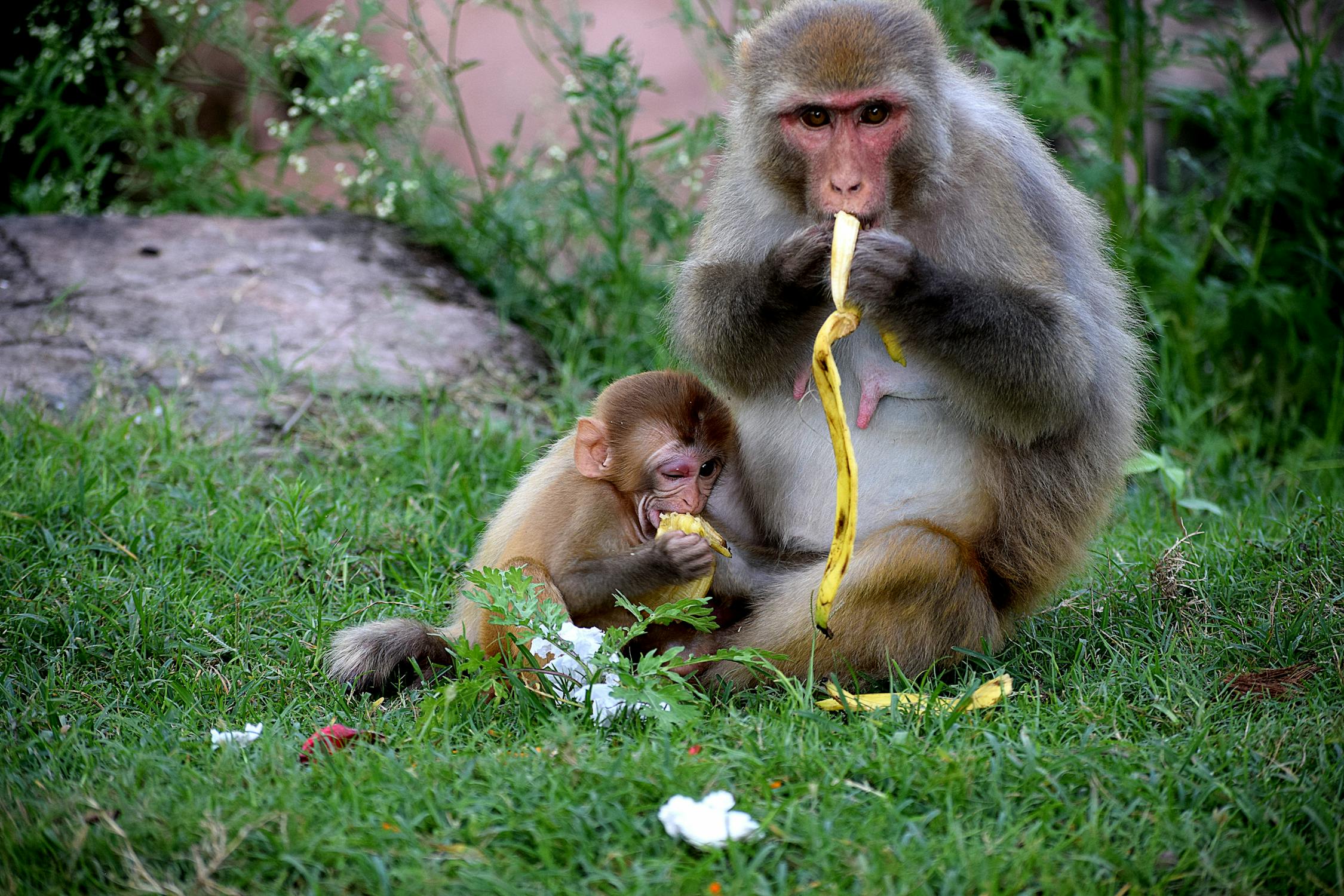
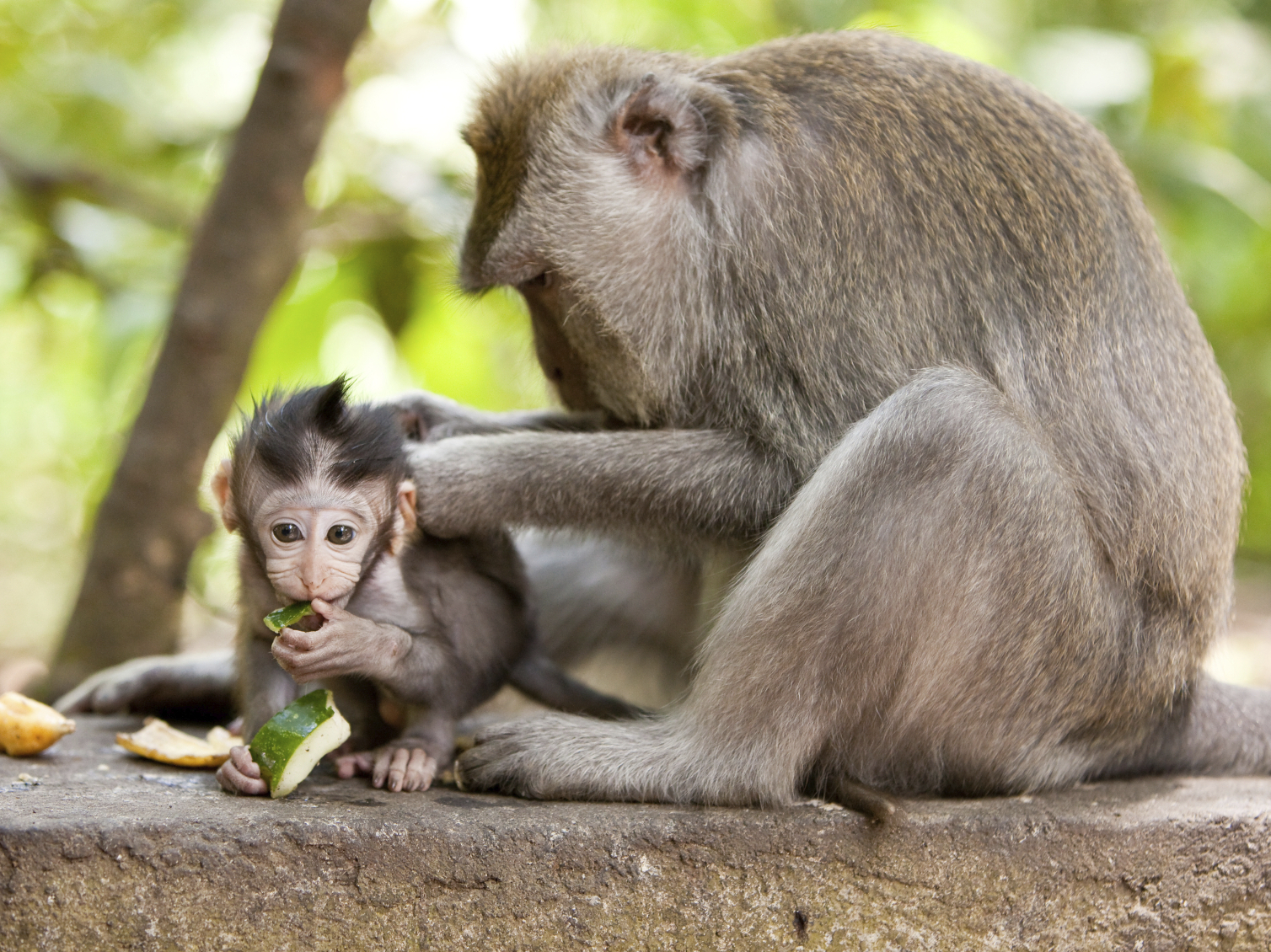
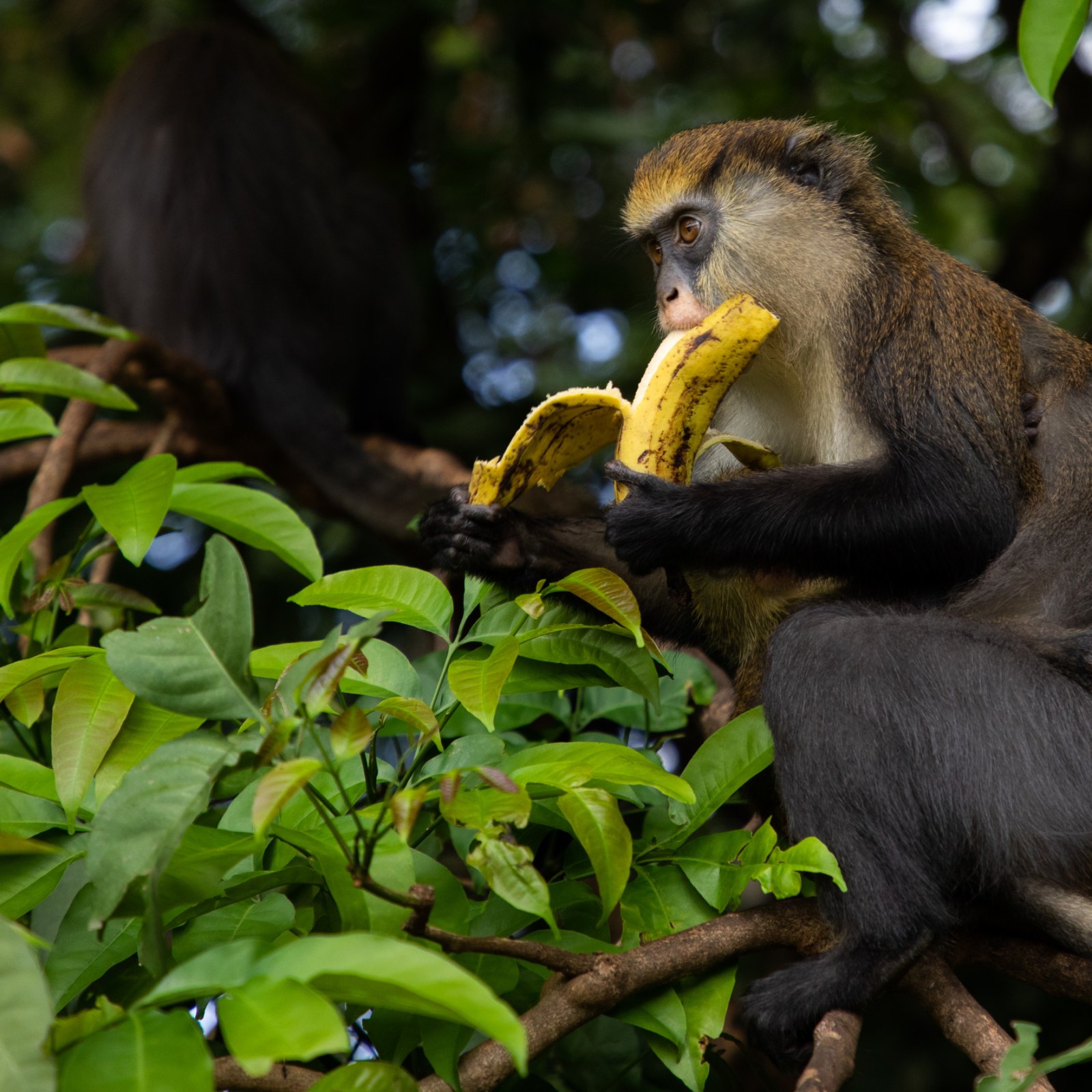
Monkeys don’t mind working for their food if the payoff is high in energy. Seeds and nuts require patience and sometimes strength. A baboon can crack a seedpod that would defy your grip. Watching them pry apart the tough shell, you realize how much practice goes into each meal.
Some species will scrape at tree bark or dig out roots during dry spells. It’s an image that stays with you: a group of monkeys, silent except for the soft tearing sound as they strip away bark fibers, a reminder that survival often means doing what isn’t easy.
Although many people think monkeys are strictly plant-eaters, most are more flexible than that. Insects, bird eggs, and even small lizards are part of the diet, especially when fruit is scarce.
Imagine a capuchin gently turning over leaves to find a beetle or poking a stick into a hollow log. It’s more than curiosity. It’s problem-solving with a purpose. The protein in insects can make the difference between getting through a lean month or not.
In some places, vervet monkeys raid bird nests. They crack eggs carefully and lap up the contents. You can almost sense the calculation: Will the risk of climbing out to that branch pay off?
Monkeys don’t always drink from rivers. Much of their water comes from juicy fruits and fresh leaves. But when the weather turns hot and dry, they’ll climb down to drink from pools or lick dew from leaves.
Baboons often dig shallow holes in dry riverbeds to reach hidden moisture. It’s a small act that shows their memory and understanding of their home. If you’ve ever hiked in dry country and felt the relief of finding a cool stream, you’ll understand why a monkey pauses, scoops a handful of water, and takes its time.
What a monkey eats in January may look very different from what it finds in August. Rain brings flowers and soft leaves. The dry season turns meals into a scavenger hunt.
In East Africa, the fruiting of fig trees draws whole troops together. You might see monkeys gorging on figs, leaving the ground below littered with skins. A month later, the same trees stand bare, and the monkeys have moved on to pods or shoots.
This constant shift makes them experts in their territory. They remember which trees ripen first, which hidden crevices shelter insects, which patches of grass grow back quickest after the rains.
There’s something strangely familiar about watching a monkey eat. The way it inspects a fruit, tests the weight, and sometimes discards it. A baboon will pick up a piece of bark, sniff it, then drop it if it’s too dry.
In a way, you do the same when you choose avocados or sort through strawberries. There’s a universal instinct: Is this good enough? Is it safe? Is there something better nearby?
Monkeys show that eating isn’t only survival. It’s a process shaped by learning, sharing, and judgment. Young monkeys watch their mothers to see what’s safe. Older ones know when to risk climbing higher or digging deeper.
If you’ve never been to Africa, it can be hard to picture what it feels like to watch monkeys in their element. Here are a few places where you might find them:
Standing quietly while a monkey tears into a seedpod or lifts its head to taste rain dripping from a branch is a small privilege. You feel, perhaps, a little closer to the rhythm of a life spent depending on the land.
Monkeys don’t have the luxury of choice in the way you do, browsing shelves stacked with every season’s produce. They take what the land offers, and sometimes that means shifting expectations overnight.
Watching them, you start to appreciate the blend of routine and improvisation. One day’s meal might be ripe fruit picked in the sun. The next, a scavenged insect or a handful of grass.
It’s not always comfortable, but it works. And maybe there’s a quiet lesson in that. Survival isn’t about finding the perfect option. It’s about learning, adapting, and staying curious enough to look for the next possibility.
Step into the heart of Africa. Witness Tanzania’s wild wonders up close. Your soul-stirring safari begins here.